The gorilla families of Volcanoes National Park

Guests often arrive hoping to be sent to a particular gorilla family. Understanding how allocation genuinely works at Kinigi — and what a good operator can and cannot influence — sets expectations properly and, in practice, gets guests a better-matched trek.

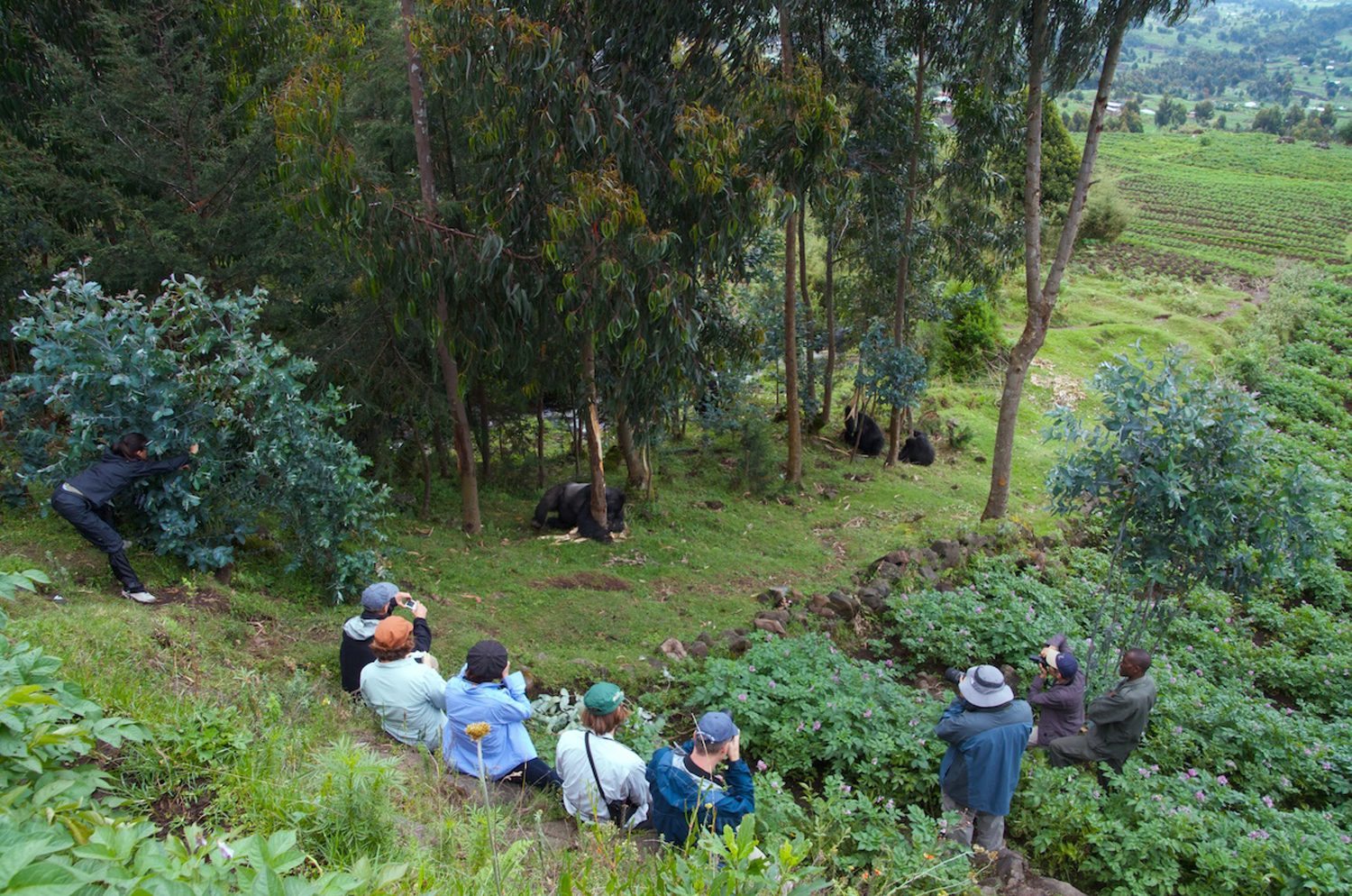
A mountain gorilla family resting in the undergrowth of Volcanoes National Park, Rwanda

At a glance

Habituated families
Roughly a dozen available to visitors
Visitors per family
Maximum eight per day
Allocation point
Kinigi park headquarters, at the 07:00 briefing
Trek length
From about one hour to a full day each way
Altitude range
2,400m to above 3,000m
Well-known families
Susa, Igisha, Amahoro, Agashya, Sabyinyo, Kwitonda, Umubano, Hirwa

How allocation works

Every visitor gathers at Kinigi at 07:00. Wardens divide guests into groups of eight and assign each group to a family based on where the trackers located that family the previous evening, the day's weather, and the fitness and needs of the people in front of them. No lodge, and no operator, can guarantee a family in advance.

What an operator can do is speak for you. We tell the wardens honestly about your fitness, age, knees, altitude experience and photography intentions before the briefing begins. That single conversation is why guests who need a gentler trek generally get one.

The gentler treks

Families that habitually range lower on the slopes of Sabyinyo and Gahinga — Sabyinyo, Agashya and Kwitonda among them — often mean a walk of one to three hours each way on comparatively moderate ground. These are the allocations we push for when guests are older, travelling with a recent injury, or simply not walkers.

Nothing is fixed: gorillas move nightly, and a family that was an easy hour last week may be high on the mountain today.

The demanding treks

Susa, historically Dian Fossey's study group, and Igisha range high on Karisimbi. A visit can mean five to eight hours of walking, much of it steep, at altitudes above 3,000 metres. It is the most rewarding trek in the park for fit walkers and the wrong choice for anyone unsure of their knees.

If you actively want a hard day, tell us. Wardens are as glad to hear that as they are to hear the opposite.

What you see once you arrive

Each family is led by one or more silverbacks and includes blackbacks, adult females, juveniles and, often, infants. Your hour begins the moment contact is made. Trackers keep the group at the required distance, and the gorillas — entirely habituated to human presence — largely ignore you and continue feeding, grooming and tumbling downhill.

Porters are available for every trek and we book them for everyone. They carry your camera bag, steady you on descents, and the fee goes directly into households on the park boundary.

— Questions

The Familiesanswered

Can I choose which gorilla family I trek to?

No. Wardens allocate families at the Kinigi briefing based on where the trackers found each family, the weather, and the fitness of the visitors present. What we can do is speak for you at the briefing so your allocation matches your ability.

Which gorilla family is the easiest to reach?

Families ranging lower on Sabyinyo and Gahinga — Sabyinyo, Agashya and Kwitonda are frequent examples — often involve one to three hours of walking each way. It changes daily because the gorillas move every night.

How close do you get to the gorillas?

Rwanda asks visitors to keep a distance of about seven metres, and to wear a mask when close. The gorillas themselves frequently ignore the rule and walk past you; the requirement is that you do not approach them.

Can I trek twice and see two different families?

Yes, and it is the single best upgrade to a Rwanda itinerary. A second permit on a consecutive day almost always means a different family, a different part of the forest and a completely different hour.

— Bespoke Composition

Tailor your journey.

Tell us a little about how you travel. Our team will reply within 24 hours with a draft itinerary composed for you alone.

Private expeditions are typically composed from USD $10,500 per guest, fully inclusive of gorilla permits, lodging, guiding and transfers.

Curated by Gerry
Have questions first? See our Journey Guide