The best time for gorilla trekking in Rwanda

Gorillas are tracked every single day of the year in Volcanoes National Park, so there is no closed season and no month in which you cannot trek. What changes is the state of the trails, the amount of rain that falls on you, how far the families have moved up or down the mountain, and how far ahead you must book. This guide sets out what each period is actually like rather than simply labelling months good or bad.

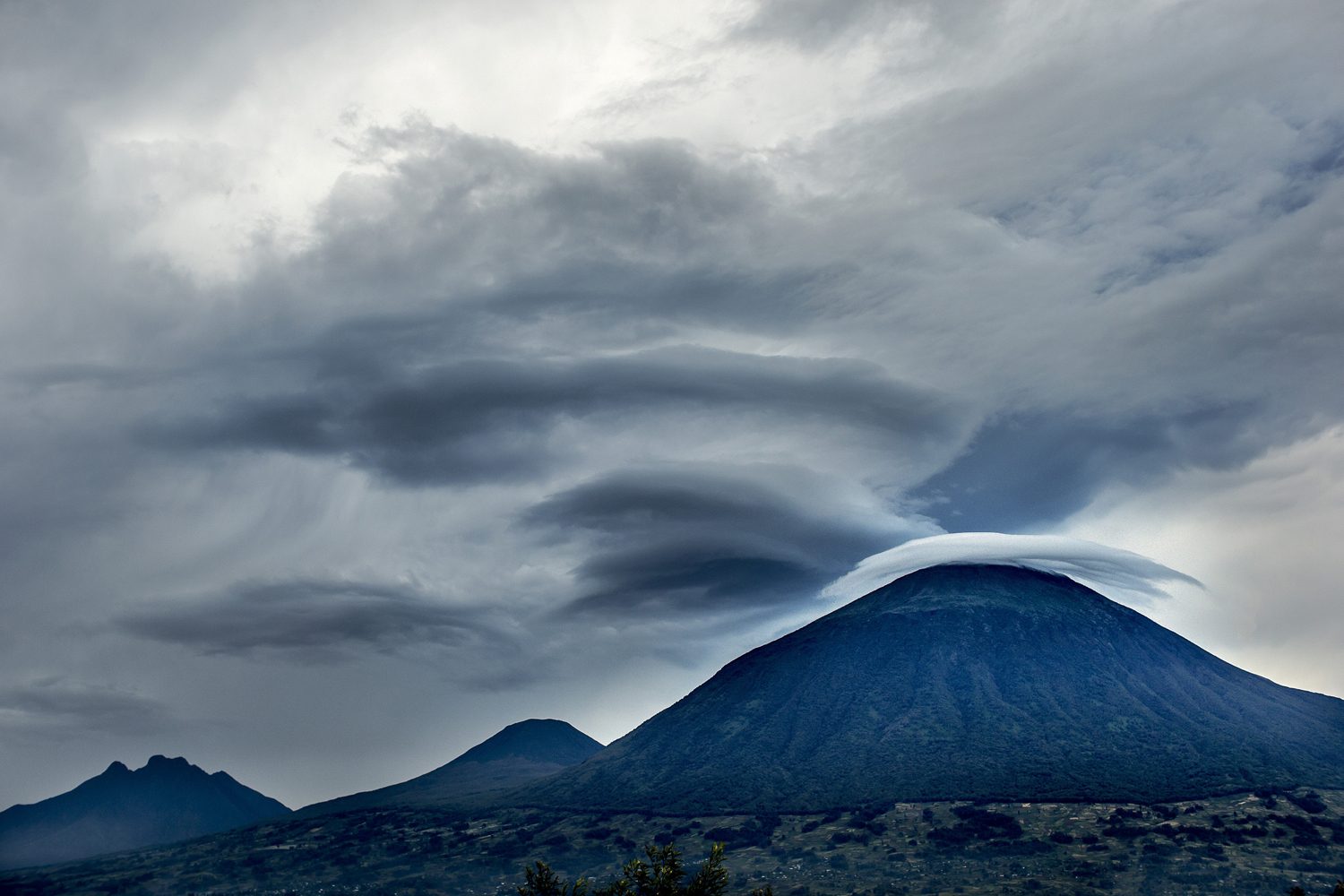
Evening light over the Virunga volcanoes in Volcanoes National Park, Rwanda

At a glance

Long dry season
June to mid-September — firmest trails, busiest permits
Short dry season
Mid-December to February — warm, clear, popular
Long green season
March to May — wettest, lushest, quietest
Short green season
October to November — afternoon showers, excellent light
Daytime temperature
16–24°C at park altitude, all year
Night temperature
8–12°C at 2,500m and above
Book permits
9–12 months ahead for June–September and December

Dry season: June to mid-September

This is the period most travellers choose, and with good reason. Trails through the bamboo and Hagenia zones are at their firmest, the volcanoes clear early in the morning, and the chance of a full day of rain is at its lowest. Every activity in Volcanoes National Park begins in the morning, with the briefing at Kinigi at 07:00, so a dry-season morning gives you the best light of the year for photography.

The cost of that certainty is availability. The lodges around the park — Bisate, Singita Kwitonda, One&Only Gorilla's Nest, Virunga Lodge — sell out nine to twelve months ahead for these dates, and permits go with them. If your travel is fixed to school holidays in July or August, treat the booking window as a year out rather than a few months.

Short dry season: mid-December to February

The second dry window is shorter and slightly warmer. Late December is festive and busy; January and February are among the most pleasant weeks of the whole year in Rwanda, with dry mornings, comfortable temperatures and thinner crowds than August. February in particular is a quietly excellent month that few visitors think of.

Kwita Izina, Rwanda's gorilla-naming ceremony, usually falls in September rather than this window, so if that event matters to you, plan around the dry season instead.

Green seasons: March to May and October to November

The green seasons bring rain — often as a heavy afternoon downpour rather than continuous drizzle — and with it deep, saturated forest, fresh bamboo shoots and, frequently, gorilla families feeding lower down the mountain because the food is there. Shorter treks are more common in these months, which suits guests worried about fitness.

The trade-offs are real: mud that reaches mid-calf in places, leech-friendly undergrowth, and cloud that can hide the volcanoes for a whole morning. Gaiters and a genuinely waterproof jacket matter more than anything else you pack. In exchange, some lodges reduce rates, the park is quieter, and permits are far easier to secure at short notice.

So which month should you choose?

If this is a once-in-a-lifetime trip and you want the firmest possible trails, aim for late June, July, August or early September and book a year ahead. If you care most about photography and atmosphere, October, November and early March give you dramatic skies and far fewer people at the briefing. If you are travelling with a tight budget or at short notice, April and May are the most forgiving months in every respect except rainfall.

Whichever window you pick, we secure permits directly with the Rwanda Development Board as the first act of planning, not the last — the lodges can usually be adjusted, the permits cannot.

— Questions

Timinganswered

What is the single best month for gorilla trekking in Rwanda?

August has the firmest trails and the most reliable weather, but it is also the busiest and most expensive month. For the best balance of dry trails, availability and value, late June or early September are our usual recommendation, with February as an excellent quieter alternative.

Is gorilla trekking worth it in the rainy season?

Yes. The gorillas do not move out of the park, permits are easier to obtain, some lodges are cheaper, and treks are frequently shorter because families feed at lower altitudes. You simply need proper waterproofs, gaiters and a tolerance for mud.

How far in advance should I book a Rwanda gorilla safari?

Nine to twelve months for June to September and the Christmas period; three to six months for the green seasons. Rwanda issues a limited number of permits per day, and once they are gone for a date, no operator can create more.

Does the weather affect how long the trek takes?

Indirectly. Rain softens the trails and slows walking, but it also often brings the families lower down the mountain. Treks range from around one hour to a strenuous full day in every season; the family you are assigned matters more than the month.

— Bespoke Composition

Tailor your journey.

Tell us a little about how you travel. Our team will reply within 24 hours with a draft itinerary composed for you alone.

Private expeditions are typically composed from USD $10,500 per guest, fully inclusive of gorilla permits, lodging, guiding and transfers.

Curated by Gerry
Have questions first? See our Journey Guide