Gorilla Trekking
Packing List
Everything to wear and carry for an hour with the mountain gorillas of the Virungas — footwear, protective layers, photography gear, and a complete checklist, drawn from a decade of private Rwandan treks.
Waterproof boots, long layers, gloves, and a waterproof shell.
The Virungas are volcanic, steep, and wet — often all three before breakfast. You will walk through bamboo, hagenia woodland, and stinging nettle at 2,500–3,700 metres, and the weather can move from warm sun to cold rain in minutes. The right clothing is less about fashion than about staying dry, covered, and sure-footed.
Two principles govern the whole list. First, cover your skin: long sleeves and trousers protect against nettles, thorns, and safari ants. Second, layer for change: a base you can sweat in, a fleece for the cool morning, and a waterproof shell for the rain that is possible in every month. Hire a porter at the trailhead and let them carry the rest.
What to pack, category by category
Every item below has earned its place on a real trek. Essentials are marked; the rest depends on the season and your own comfort. Your porter carries the daypack, so weight is not the constraint — preparedness is.
Footwear
Waterproof hiking bootsEssential
Ankle support, broken in weeks before. The single most important piece of gear you bring.
Thick merino or wool socksEssential
Two pairs. Long enough to tuck over your trouser legs against safari ants.
Gaiters
Optional in the dry season, near-essential in the rains. Keep mud, water, and ants out of your boots.
Camp shoes
Light trainers or sandals for the lodge after the trek.
Clothing — protective layers
Long-sleeved shirtEssential
Neutral colours (khaki, olive, grey). Long sleeves protect arms from stinging nettles and thorn scrub.
Long trousers (quick-dry)Essential
Tucked into socks. Avoid shorts and bright colours. Two pairs lets one dry while you wear the other.
Fleece or light insulation layerEssential
Mornings at 2,500 m are cool (10–15 °C). You shed it once the climb warms you.
Lightweight waterproof jacketEssential
Rain is possible in every month in the Virungas. A packable shell weighs nothing and saves the day.
Gardening or trekking glovesEssential
You grip bamboo, vines, and stinging nettles to steady yourself. Gloves protect your hands and let you reach freely.
Sun hat
Wide brim for the open stretches above the bamboo zone.
Light rain poncho
Covers you and your daypack in a downpour.
Photography & electronics
Camera body (no flash)Essential
Flash is strictly prohibited — it distresses the gorillas. Disable it before the trek begins.
Telephoto lens 70–200mmEssential
The best reach: close enough for detail, not so long that the forest dark defeats your autofocus. A fast f/2.8 lens matters in low light.
Extra batteriesEssential
Cold and altitude drain them faster than you expect. Carry at least one spare.
Memory cardsEssential
A single hour with the gorillas fills cards fast. Bring more than you think you need.
Waterproof dry bagEssential
A 5L roll-top bag for camera and phone inside your daypack. Forest humidity and rain kill electronics.
Lens cloth & blower
Forest mist and pollen fog the front element constantly.
Power bank
For the drive back and evenings at the lodge.
Health & comfort
Insect repellent (DEET 30%+)Essential
For the buffer-zone farmland before you reach the forest.
Sunscreen SPF 30+Essential
The equatorial sun is strong above the canopy.
Drinking water (1–2 litres)Essential
Your porter carries it. Hydration is the simplest defence against altitude headache.
SnacksEssential
Energy bars or trail mix. The trek can run four hours past lunch.
Personal medicationEssential
Any prescription items, plus blister plasters and a basic painkiller. Carry them on your person, not in the porter's pack.
Hand sanitiser & wipes
For hands before eating and after the trail.
Documents & money
Gorilla trekking permit (printout)Essential
Your guide carries the original, but keep a photo and printout of the confirmation.
PassportEssential
Checked at Kinigi headquarters before the briefing.
Small USD notes ($5, $10, $20)Essential
For porter fees ($20), tips ($10–15), and lodge staff. Newer series notes only.
Travel insurance detailsEssential
Card and emergency number, kept on your person.
Your boots decide the day
More treks are spoiled by poor footwear than by poor fitness. The volcanic ground is uneven, slick when wet, and steep enough that a rolled ankle ends the walk. You need three things from your boots: waterproofing, ankle support, and grip.
Choose a mid-to-high hiking boot with a lugged outsole — not a trail runner, not a walking shoe. Waterproof membranes (Gore-Tex or equivalent) keep your feet dry through the wet bamboo and stream crossings that mark the lower trail. Break them in for at least two weeks before you fly; blisters on a steep, muddy slope are miserable and entirely avoidable.
Pair them with thick wool or merino socks — long enough to pull over the bottom of your trousers. This is your defence against safari ants, which swarm in the buffer zone and are the most frequent, if minor, discomfort of the day. Gaiters add a second line of defence and are worth their weight in the wet season.
Dress to be covered, dry, and unseen
Cover your skin
Long sleeves and long trousers are non-negotiable. The trail cuts through stinging nettles and thorn scrub, and you will grip vegetation to steady yourself on the steeper sections. Exposed skin gets scratched, stung, and uncomfortable within the first hour.
Layer for the altitude
Mornings at 2,500 m sit at 10–15 °C. You start in a base layer, a fleece, and a shell — then shed the fleece once the climb warms you. A light, packable insulation layer weighs nothing and earns its place when you stop to watch the family.
Wear neutral colours
Khaki, olive, and grey blend with the forest and do not draw the gorillas' attention. Avoid bright colours, pure white, and dark blue — the latter attracts tsetse flies in the lower buffer zone. Earth tones are the unwritten rule of the Virungas.
Gloves. Gardening or lightweight trekking gloves are one of the most underrated items on the list. You will grip bamboo, vines, and nettle stalks constantly to pull yourself up steep ground — gloves protect your hands and let you reach freely without flinching. Leather-palm work gloves are inexpensive and ideal.
One hour. Make it count.
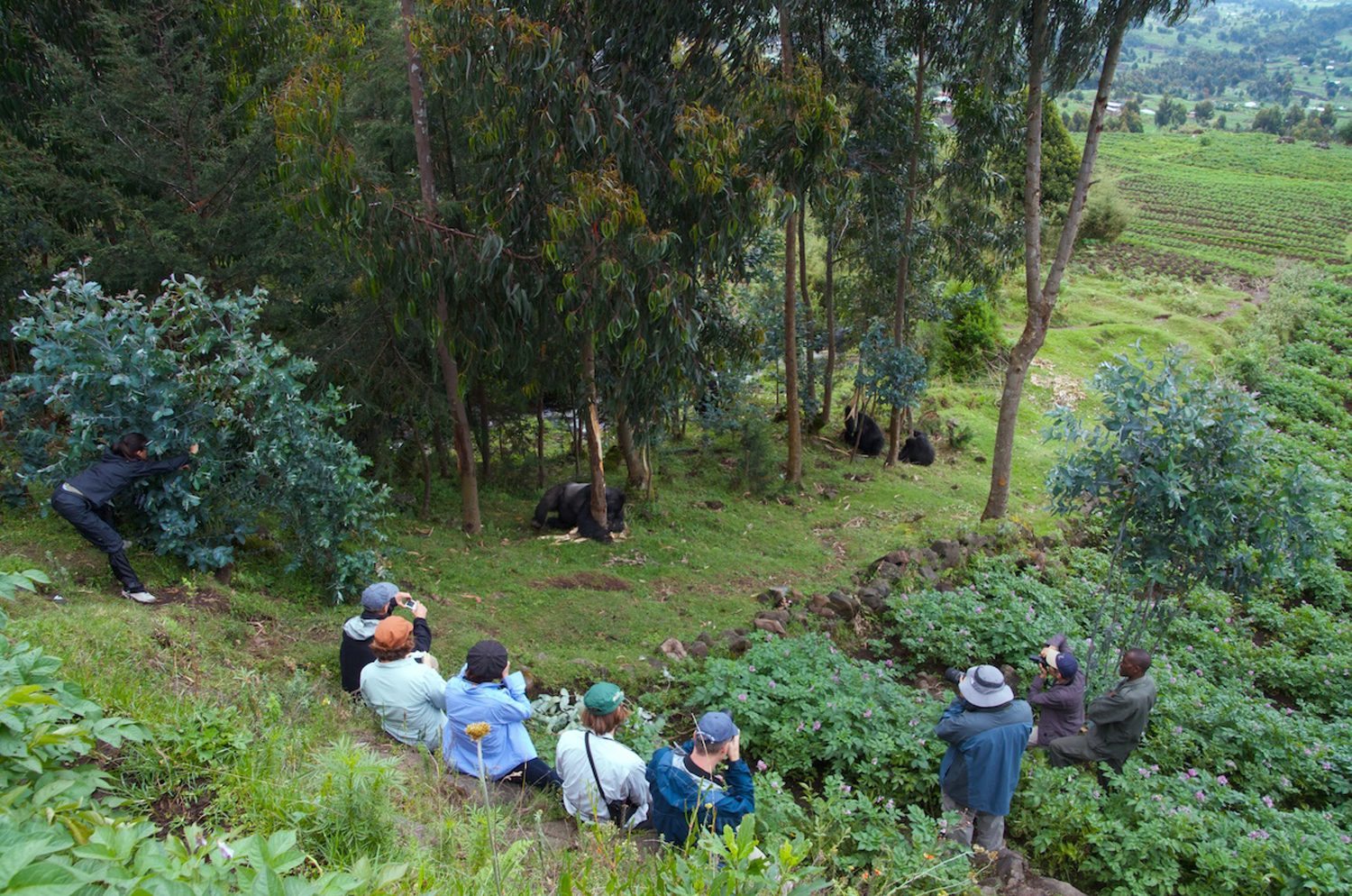
You have exactly one hour with the gorilla family, in low forest light, often in mist or rain. The right gear and the right settings, decided before you reach the family, are what separate a keepsake from a photograph.
A 70–200mm telephoto lens is the ideal range — close enough for rich facial detail, not so long that the dim canopy defeats your autofocus. A fast f/2.8 lens matters; the forest is darker than you expect, and shutter speed is your friend. Bring spare batteries (cold and altitude drain them faster) and more memory cards than seems reasonable — an hour with the gorillas fills them quickly.
Carry everything electronic in a waterproof dry bag inside your daypack. Forest humidity and sudden rain are the leading cause of camera failure on the trail. And above all: disable your flash before the trek begins. Flash is strictly prohibited — it distresses the gorillas and will see your camera confiscated for the hour.
Pack for the season you trek in
Rwanda has two dry and two wet seasons, and the packing list shifts with them. The waterproof shell is constant; gaiters, spare layers, and dry bags come and go.
Dry season (June–Sept, Dec–Feb)
Firm trails, lower humidity, clearer views. Still pack a waterproof shell — rain in the Virungas is never impossible. Lighter layers suffice; one shirt and trouser pair per trek day is usually enough.
Wet season (March–May, Oct–Nov)
Steep, muddy trails and heavier rain. Gaiters become essential, bring two waterproof layers, double your sock supply, and protect every electronic in a dry bag. The forest is at its most lush and photogenic, and you will have the families more to yourselves.
Packing, answered
What should I wear for gorilla trekking in Rwanda?
Waterproof hiking boots with ankle support, long trousers tucked into thick socks, a long-sleeved shirt in a neutral colour, a fleece or light insulation layer, a waterproof shell jacket, and gardening or trekking gloves. Rain is possible in every month in the Virungas, so the waterproof layer is non-negotiable regardless of season. Neutral colours (khaki, olive, grey) are preferred — bright colours and pure white stand out against the forest and can distract the gorillas.
Can I wear shorts on a gorilla trek?
No. Long trousers are essential. The trail leads through stinging nettles, thorn scrub, and dense vegetation, and you will frequently grip bamboo and vines to steady yourself on steep ground. Trousers tucked into long socks also keep safari ants off your legs. Shorts guarantee scratched, stung, and uncomfortable legs within the first hour.
What kind of boots do I need for gorilla trekking?
Sturdy, waterproof hiking boots with ankle support, broken in well before you arrive. The volcanic terrain is uneven and often steep, and ankle rolls are the most common trek injury. Lightweight trail runners do not give enough support or grip on wet bamboo. Break the boots in for at least two weeks at home — blisters end more treks than fitness does.
Why do I need gloves for gorilla trekking?
To grip vegetation. The trail through the bamboo and hagenia zones requires you to steady yourself on stalks, vines, and branches, much of which is stinging nettle. Gardening gloves or lightweight trekking gloves protect your hands and let you reach freely without hesitation. Leather-palm work gloves are inexpensive and ideal; you do not need specialist gloves.
What camera gear should I bring for gorilla trekking?
A camera body with a 70–200mm telephoto lens is the ideal range — close enough for rich detail, not so long that the dim forest defeats your autofocus. A fast f/2.8 lens matters in the low light under the canopy. Carry spare batteries (cold and altitude drain them), extra memory cards, a waterproof dry bag for the whole kit, and a lens cloth. Flash photography is strictly prohibited — disable it before the trek begins.
Do I need to carry everything myself?
No — and you should not. Hire a porter at the trailhead (USD $20) to carry your daypack with water, snacks, and spare layers. You carry only what you need during the actual hour with the gorillas: camera, phone, and medication. Porters also give you a hand on steep and muddy ground. Tip an additional USD $10–15.
Is there a weight limit for my daypack?
There is no formal limit, but keep your daypack under 5 kg. The porter carries it, but you may want it on your back for the steepest sections, and a heavy pack throws off your balance on wet ground. Water, snacks, a spare layer, a dry bag, and your camera are all you need.
Should I pack differently for the wet season?
Yes. In the rainy seasons (March–May and October–November) add gaiters, a second pair of socks and trousers, a rain poncho that covers your daypack, and dry bags for every electronic. Double your sock supply, and accept that you will be wet regardless — the reward is a lusher, greener forest and far fewer fellow trekkers.
Trekking difficulty & fitness
How hard the trek really is, family-by-family grades, and a six-week preparation plan.
Permit costs & pricing
What a gorilla permit costs, what it includes, and how a full journey is priced.
Before you journey — FAQ
Every other practical question — permits, visas, timing, health, and the Gerry experience.
Have your list?
Begin your inquiry.
Share what stirs you. Our team will reply within one working day with a draft itinerary written for you alone — permits, lodges, and a porter for every trek day included.
Compose Your JourneyTailor your journey.
Tell us a little about how you travel. Our team will reply within 24 hours with a draft itinerary composed for you alone.
Private expeditions are typically composed from USD $10,500 per guest, fully inclusive of gorilla permits, lodging, guiding and transfers.