
Lake Kivu: the quiet days of a Rwanda safari

After two early mornings on a volcano, most guests want somewhere to stop entirely. Lake Kivu is that place: bilharzia-free, crocodile-free, warm enough to swim in, ringed by terraced hills, and about three hours from the Virungas. It is the part of the itinerary people are surprised to have loved most.

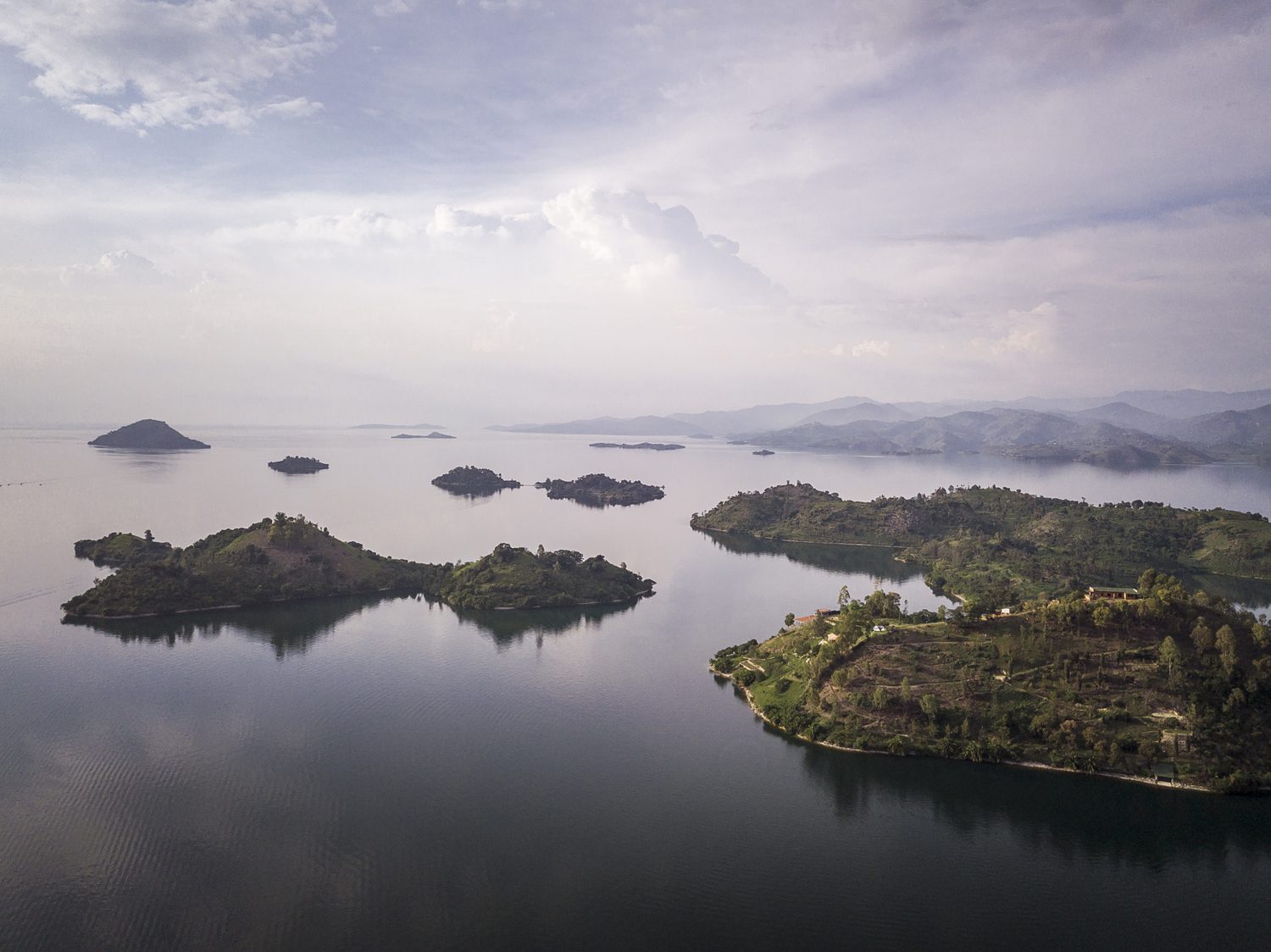
Aerial view of the islands of Lake Kivu, Rwanda

At a glance

Ideal stay
2–3 nights
Swimming
Safe — no bilharzia, no crocodiles, no hippo
Main bases
Rubavu (Gisenyi), Kibuye (Karongi), Rusizi
Volcanoes to Rubavu
About 1.5 hours
Nyungwe to Kivu
About 3 hours
Activities
Kayaking, boat picnics, island hopping, coffee estates
Long-distance option
Congo Nile Trail, by bike or on foot

Why it belongs in the itinerary

A Rwanda trip built purely on primates is relentless: early briefings, steep ground, high altitude, and adrenaline. Lake Kivu breaks the rhythm. It is one of the very few large lakes in the region where swimming is entirely safe, and the water is warm enough to make that a genuine pleasure rather than a technicality.

Placing Kivu after the Virungas rather than before also means the trip ends in stillness. Honeymooners in particular should structure the week this way.

Where to base yourself

Rubavu, formerly Gisenyi, is closest to Volcanoes National Park at about ninety minutes, with a proper lakeside promenade and frangipani-lined avenues. Kibuye on the Karongi shore is quieter and has the most beautiful island-scattered water. Rusizi in the south suits guests coming up from Nyungwe.

Lodges range from the polished to the very simple. We match the choice to where the rest of your itinerary sits rather than by name recognition.

What to actually do

Kayak at first light when the water is glass. Take a boat between the islands with lunch aboard. Watch the singing fishermen head out at dusk in their triple-hulled boats — it is a genuinely moving sight and it happens every evening without being staged. Visit a coffee washing station on the terraced slopes above the shore.

For the more active, the Congo Nile Trail runs 227 kilometres along the eastern shore and can be sampled by mountain bike for a day or two rather than tackled whole.

Fitting it in

Two nights is enough to feel the difference; three is better. The classic eight-night shape is Kigali, the Virungas with two treks, then Lake Kivu, then home. On a longer ten to fourteen night itinerary, Kivu sits naturally between Nyungwe National Park and the Virungas as a break in the driving.

Because all Volcanoes National Park activities start in the morning, you can trek and be at the lake by mid-afternoon on the same day — a good use of a transfer day.

— Questions

Lake Kivuanswered

Can you swim in Lake Kivu?

Yes. Lake Kivu is free of bilharzia, crocodiles and hippo, and the water is warm. It is one of the very few large lakes in the region where swimming is entirely safe.

How far is Lake Kivu from the gorillas?

Rubavu on the northern shore is about ninety minutes from the lodges around Volcanoes National Park, so you can trek in the morning and be at the lake by mid-afternoon.

How many nights should I spend on Lake Kivu?

Two nights is enough to properly stop; three is better if you want to kayak, take a boat out to the islands and visit a coffee estate without hurrying.

What is there to do at Lake Kivu?

Kayaking, island-hopping boat trips with lunch aboard, swimming, coffee washing-station visits, the singing fishermen at dusk, and sections of the 227km Congo Nile Trail by bike or on foot.

— Bespoke Composition

Tailor your journey.

Tell us a little about how you travel. Our team will reply within 24 hours with a draft itinerary composed for you alone.

Private expeditions are typically composed from USD $10,500 per guest, fully inclusive of gorilla permits, lodging, guiding and transfers.

Curated by Gerry
Have questions first? See our Journey Guide