
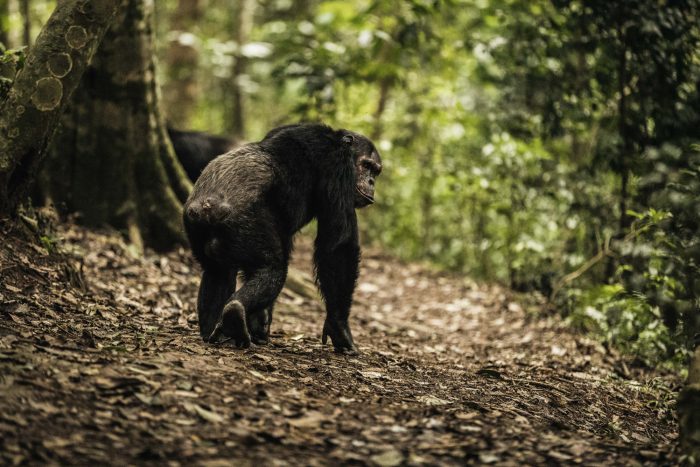
Chimpanzee trekking in Nyungwe National Park

Chimpanzee trekking in Nyungwe is the least comfortable and most genuinely wild primate experience in Rwanda. The start is before dawn, the ground is steep and slippery, the chimps move fast and high, and sightings are not guaranteed. Guests who understand that in advance almost always enjoy it; guests who expect a gorilla-style hour do not.

A chimpanzee in the rainforest canopy of Nyungwe National Park, Rwanda

At a glance

Permit
Considerably cheaper than a gorilla permit; set by RDB
Start time
Around 05:00 from the lodge
Duration
2–6 hours
Sighting likelihood
Good but not guaranteed — they move fast and high
Tracking areas
Cyamudongo forest and the Uwinka/Gisakura sector
Minimum age
15
Reliable alternative
Angolan colobus troops of 300+ individuals

What the morning is like

You leave the lodge around 05:00 to meet trackers who located the group the previous evening. The forest is dark, wet and steep, and the first indication is usually sound — a distant burst of calling that sends the guides moving quickly off the path. Then it becomes a chase, at pace, through undergrowth.

When you find them, they may be sixty feet up and moving. The hour you are permitted is often broken into glimpses rather than a sustained sitting. That is what wild chimpanzee tracking is, and it is thrilling on its own terms.

Cyamudongo versus Uwinka

The Cyamudongo forest fragment, an hour or so from the main park, holds a smaller, better-habituated community and tends to produce more reliable sightings on more manageable ground. The larger Uwinka and Gisakura sectors hold a bigger community across much more difficult terrain.

We generally send guests to Cyamudongo unless they specifically want the harder, wilder option — and we stay honest that neither guarantees anything.

The colobus alternative, which many prefer

Nyungwe's Angolan colobus troops number in the hundreds — supertroops of 300 or more animals moving through the canopy together. They are far easier to reach, the viewing is sustained rather than fleeting, and photographically it is the better morning.

If you have one day in Nyungwe and want certainty, track colobus in the morning and walk the canopy walkway afterwards. If you have two, do chimpanzees on the first day and colobus on the second.

Fitting Nyungwe into the trip

Nyungwe is four to five hours from Kigali and about three from Lake Kivu, so it sits naturally on a longer loop that also takes in the Virungas and Akagera. Two or three nights is right, at One&Only Nyungwe House or one of the Top View lodges.

Including Nyungwe National Park and Akagera National Park in the same itinerary as gorilla trekking also qualifies your gorilla permits for Rwanda's discounted USD $1,050 rate.

— Questions

Chimpanzeesanswered

How difficult is chimpanzee trekking in Nyungwe?

Harder than gorilla trekking in one specific way: the chimps move fast, so you follow at pace over steep, slippery ground. It typically takes two to six hours and sightings are good but not guaranteed.

Are you guaranteed to see chimpanzees in Nyungwe?

No. Trackers locate the community the previous evening and success rates are good, but chimpanzees travel quickly and high in the canopy. Anyone promising a guarantee is not being straight with you.

Is chimpanzee or colobus trekking better in Nyungwe?

For reliability and photography, the Angolan colobus supertroops of 300 or more animals are the better experience. For the thrill of genuinely wild tracking, chimpanzees. With two days, do both.

How many nights should I spend in Nyungwe?

Two or three. That allows a chimpanzee morning, a colobus morning, the canopy walkway and a tea estate visit without any of it feeling rushed.

— Bespoke Composition

Tailor your journey.

Tell us a little about how you travel. Our team will reply within 24 hours with a draft itinerary composed for you alone.

Private expeditions are typically composed from USD $10,500 per guest, fully inclusive of gorilla permits, lodging, guiding and transfers.

Curated by Gerry
Have questions first? See our Journey Guide